Kuil Caesar
| Kuil Divus Iulius | |
|---|---|
 Pemandangan perspektif Kuil Divus Iulius | |
 | |
| Jenis | Kuil mungkin dengan sebuah podium rostra di bagian depan |
| Lokasi | Regione VIII Forum Romanum |
| Koordinat | 41°53′31″N 12°29′10″E / 41.891943°N 12.486246°E |
| Dibangun | Pelantikan pada 18 Agustus 29 SM |
| Dibangun oleh | Kaisar Augustus |
Kuil Caesar atau Kuil Divus Iulius (Latin: Aedes Divi Iulii; Italia: Tempio del Divo Giulio), juga dikenals ebagai Kuil Dewa Julius Caesar, delubrum, heroon atau Kuil Bintang Komet,[1] adalah sebuah struktur kuno di Forum Romawi, Roma, Italia, yang terletak di dekat Regia dan Kuil Vesta.
Sisa altar Caesar menjadi situs ziarah bagi para pengunjung dari seluruh belahan Italia dan dunia. Bunga dan barang lainnya ditinggalkan disana pada peringatan sehari-hari dan istimewa yang diadakan pada 15 Maret untuk mengenang kematian Caesar.[2][3]
Referensi
- ^ Pliny the Elder, Naturalis Historia, 2.93–94
- ^ Nicoletti, Gianluca (2014-07-22). "Il mondo in fila". La Stampa (dalam bahasa Italia). Diakses tanggal 2024-05-24.
- ^ Quaglia, Lucilla (2019-03-15). "Sempre più fiori e monetine sull'Ara di Cesare: la tradizione si rinnova il 15 marzo". Il Messaggero (dalam bahasa Italia). Diakses tanggal 2024-05-24.
Bacaan tambahan
- Claridge, Amanda. 2010. Rome: An Oxford Archaeological Guide. 2nd ed., revised and expanded. Oxford: Oxford University Press.
- Gorski, Gilbert, and James E. Packer. 2015. The Roman Forum: A Reconstruction and Architectural Guide. New York: Cambridge University Press.
- Koortbojian, Michael. 2008. "The Double Identity of Roman Portrait Statues: Costumes and their Symbolism at Rome." In Roman Dress and the Fabrics of Roman Culture, Edited by Jonathan C. Edmondson and Alison M. Keith. Phoenix. Supplementary Volume; 46, 71-93. Toronto: University of Toronto Press.
- Phillips, Darryl Alexander. 2011. "The Temple of Divus Iulius and the Restoration of Legislative Assemblies under Augustus." Phoenix 65.3–4: 371–388.
- Wardle, David. 2002. "« Deus » or « divus » : The Genesis of Roman Terminology for Deified Emperors and a Philosopher's Contribution." In Philosophy and Power in the Graeco-Roman World: Essays in honour of Miriam Griffin, Edited by Clark, Gillian and Rajak, Tessa, 181–191. Oxford: Oxford University Press.
Pranala luar
| Sumber pustaka mengenai Temple of Caesar |

- Temple of Caesar (General Description and Photo Gallery)
- UCLA Digital Roman Forum page for the "Iulius Divus, Aedes" Archaeological discussion and 3D reconstruction
- UCLA Digital Roman Forum page for the "Rostra Diocletiani" i.e. "Rostra ad Divi Iuli" Archaeological discussion and 3D reconstruction
- The Death and Funeral of Julius Caesar
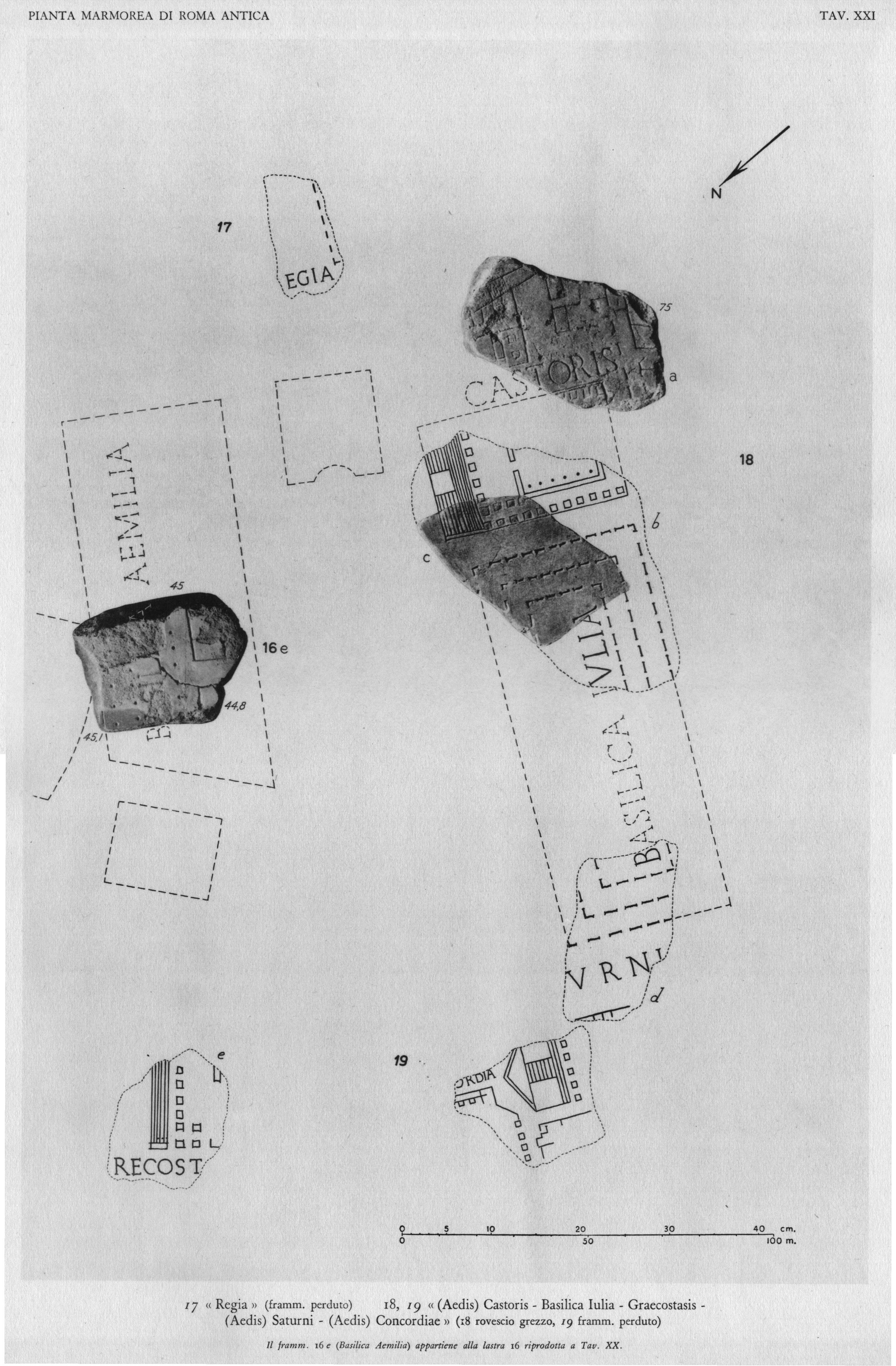
- Stanford University Forma Urbis Romae: slabs of the Forum Area with Temple of Divus Iulius (the Temple of Divus Iulius is a missing part visible only as a simple plan out of the slabs)
- Topography and Ideology: Caesar's Monument and the Aedes Divi Iulii in Augustan Rome
- Temple of Caesar at digitales Forum Romanum by Humboldt University of Berlin Diarsipkan 2021-11-17 di Wayback Machine.
- Situated simulation of the Temple of Caesar for mobile phones and tablets
| Internasional | |
|---|---|
| Nasional | |
| Geografis | |

 | Artikel bertopik Romawi ini adalah sebuah rintisan. Anda dapat membantu Wikipedia dengan mengembangkannya. |
Content Disclaimer
Informasi ini disarikan dari Wikipedia dan disajikan kembali untuk tujuan edukasi. Konten tersedia di bawah lisensi CC BY-SA 3.0. Kami tidak bertanggung jawab atas ketidakakuratan data yang bersumber dari kontribusi publik tersebut.
- The information displayed on this website is sourced in part or in whole from Wikipedia and has been adapted for the purpose of restating it. We strive to provide accurate and relevant information, however:
- There is no guarantee of absolute accuracy. Wikipedia is an open, collaborative project that can be edited by anyone, so information is subject to change.
- It is not intended to constitute professional advice. The content displayed is for informational and educational purposes only. For important decisions (e.g., medical, legal, or financial), please consult a professional.
- Content copyright. Wikipedia is licensed under the Creative Commons Attribution-ShareAlike License (CC BY-SA). This means that content may be reused with appropriate attribution and shared under a similar license.
- Responsible use. Any risk arising from the use of information from this website is entirely the responsibility of the user.